In the construction and contracting business, safeguarding yourself from unforeseen risks is paramount. Acquiring general liability or builder’s risk insurance is a crucial first step. However, you also need to furnish evidence of that coverage to project owners and stakeholders. This is where a certificate of liability insurance for contractors proves to be beneficial.
A Certificate of Liability Insurance (COI) is a succinct document that provides a snapshot of an entity’s liability insurance coverage. It serves as verification, a piece of evidence that a business has a valid insurance policy in place, showcasing the types and limits of coverage the policyholder has opted for. Whether you’re a contractor stepping onto a new project site or a vendor entering into a contract, a COI is often your passport to fruitful business engagements.
A Certificate of Insurance (COI) is a concise yet potent document encapsulating key information about a business’s insurance coverages. Its components serve as a quick reference for third parties to gauge the extent of protection in place. Let’s delve into some fundamental components of a COI:
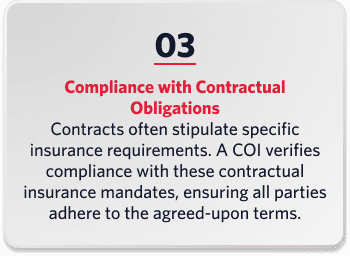
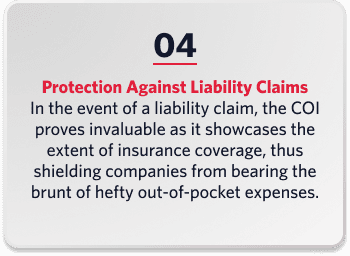
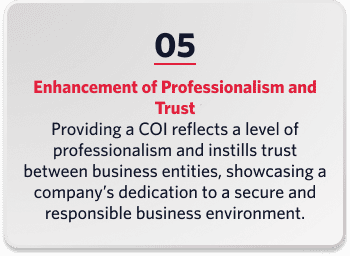
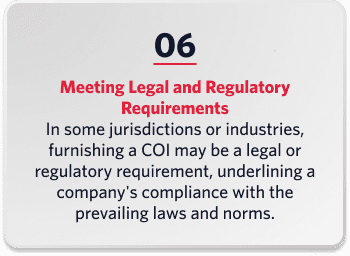
When companies venture into collaborations, hire contractors, or engage with vendors, a COI is often requested to ensure that the business interactions rest on a foundation of trust and financial security. Below are some pivotal reasons why companies request a Certificate of Liability Insurance:
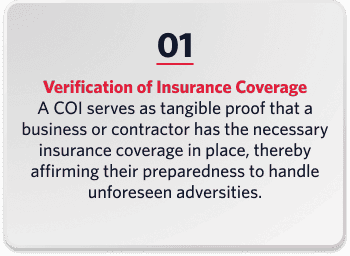
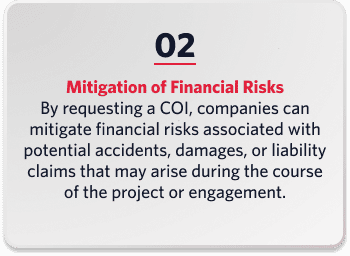
A Certificate of Insurance (COI) stands as a testament to a business’s insurance coverage, acting as a gateway to trust and confidence in professional relationships. However, the trust embedded in a COI hinges on its authenticity. In a world where fraudulent activities are not uncommon, verifying the authenticity of a COI is a prudent step. Here’s how it can be done:
Verifying a COI is a step towards fostering a secure and trustworthy business environment. It’s an exercise in due diligence that safeguards against potential fraud, ensuring that the assurance provided by a COI is founded on truth and transparency. By being vigilant and taking the time to verify a certificate of insurance, businesses can avert potential pitfalls, nurturing a culture of integrity and trust in their professional engagements.
Frequently Asked Questions (FAQ)
A Certificate of Insurance (COI) serves several pivotal purposes in the business realm, acting as a nexus between trust, transparency, and financial security.
A Certificate of Insurance (COI) is a document that provides essential details about insurance policies. For instance, a contractor might have a COI indicating general liability insurance coverage of $1 million per occurrence and $2 million aggregate, auto liability coverage of $1 million, and workers’ compensation as per state laws. The COI would also display the name of the insured, the insurance provider, policy numbers, and effective dates of coverage. It’s a concise snapshot of the contractor’s insurance coverages at a particular time.
The term “COI contract” might be a misnomer as a COI (Certificate of Insurance) and a contract are distinct entities. A COI is a document that evidences insurance coverage, whereas a contract is a formal agreement between parties. However, in business dealings, contracts often require one or more parties to provide a COI as proof of insurance to ensure compliance with the insurance requirements stipulated in the contract. The COI acts as a verification tool to confirm that the required insurance coverages are in place as per the contractual terms.
A COI and an insurance policy are not the same. A Certificate of Insurance (COI) is a document that provides a summary of the key terms and conditions of an insurance policy or policies. It provides evidence of insurance coverage, including the types and limits of coverage, the issuing insurance company, the policy number, the named insured, and the policy effective dates.